Reading “Heart of Bodhi” by Cao DeWang.
I am reading “Heart of Bodhi” by Cao Dewang.
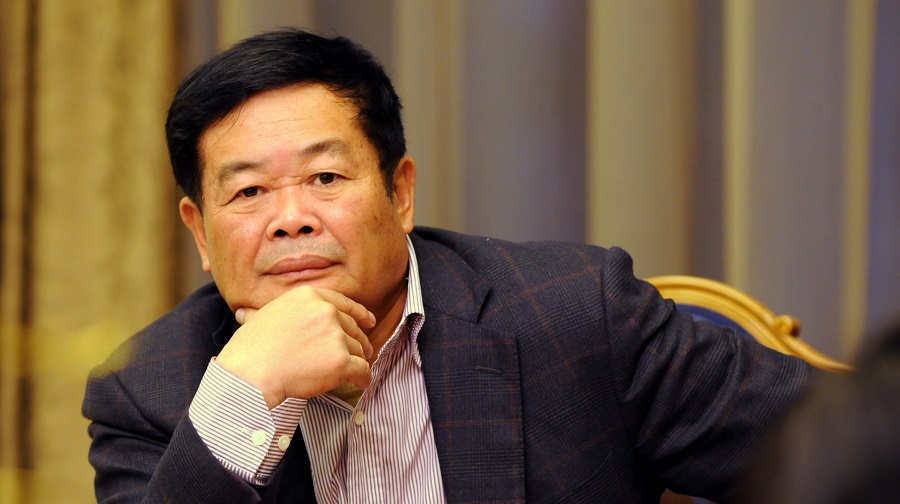
A friend recommended this book to me, and it is truly a fascinating read.
Cao DeWang is a Chinese oligarch, the head of a leading automobile glass manufacturing company, and also a member of the Chinese parliament. He is also a devout Buddhist, and also one of the leading Chinese philanthropists.
His story is seen to be a case study for a “Chinese success”, on par with the story of Ma Yun (Jack Ma), the founder of Alibaba Group, and Ren ZhengFei, the founder of Huawei.
Since this book has never been translated either into English or into Russian, I am willing to make more detailed notes than I usually do, as it may actually turn out to be useful for people interested in China, but not knowing the languages. This is the first Chinese book I am reading which is not available in other languages, knowing Chinese finally starting to pay off not just for business and work, but also for cultural enrichment. (Update: it seems that the book was translated into English, but I only found a few used copies on Ebay.)
1. Review
I am writing this review after reading the whole book. As I said, this is the first book I have read in Chinese entirely on my own, without consulting a teacher all the time. It is a good book. I cannot say that it is “great”, as it takes a bit more to become “great” than making a successful business empire, but it certainly stands on par with other biographies of famous people.
Of course, you cannot fully trust him, as he is very polite and equivocal when discussing other people. You probably also cannot learn from his experience how to make business in China, partly because, clearly, he is not saying how exactly he made his connections as efficient as they turned out to be.
But he is giving an account of the functioning of an engineering-based enterprise, and I see little motivation for him to lie. He also gives an interesting account of China during the Cultural Revolution, which was very different from the Soviet era in Russia, despite superficial similarities.
You can calibrate your sense of truthfulness about his narrative by reading his last chapter, where he is talking about investing in Russia and the USA, and compare his presented perception of Russia with yours.
His language is very smooth, and approachable for people with my knowledge of Chinese. He does use quite a few ChéngYǔ, which should help learners to memorise them, but overall his Chinese is not very difficult. I was querying the dictionary about 15 times per page, which made it about 5% of the text. Still a little too much, but manageable. Looking into the dictionary this much does not interrupt the reading flow enough to lose the narrative. I would say it is on the border, which is the best for learning.
There are a lot of entertaining stories in the book, and even if some of them are not true, or presented tendentiously, I still did not have to force myself to read, I just enjoyed it.
2. Heart of Bodhi
2.1. Family becomes poor
Cao DeWang was born in Shanghai in 1946. Interestingly, Wikipedia claims that he was born in Fujian, I wonder who is right. His parents did not give him a name, calling him instead “Little Indian”, which was a common nickname for British Indian Police often dispatched in Shanghai’s International Settlement.
His father had studied “doing business” in a clothing store in Japan, and later returned to China, started doing business in Shanghai, and became quite prosperous. His family “ran away” from the onslaught of the People’s Liberation Army marching on Shanghai, moving to a mountainous town called Fuqing, losing most of their property on the way, with a sunken cargo boat. (Can I actually believe that?) He mentions that they were discussing various ways to “escape”, including moving to the USA and to Hong Kong, but eventually they decided on Fujian. I wonder why?
In any case, they bought a hut in Fuqing GaoShan, and officially became “rural dwellers”, which by itself was not, perhaps, particularly prestigious, but turned out to be useful later, during the Cultural Revolution, when most of the troubles were happening in the cities. Nevertheless, the family became poor, and he had to work from a young age, including herding oxen and gathering firewood.
He went to a school, but, in addition to being constantly tired, was also a bit mischievous, and was kicked out from the school a few years later, for covertly climbing the wall of a toilet building an urinating onto the head of the headmaster, as a vengeance for being maltreated.
Being kicked out of school, he had to start hustling, bringing money into the family. His father taught him the basics of business, which at the time was mostly illegal trading. They were selling cigarettes and fruit, mostly delivering the goods manually, by bike, from Fuzhou to the rural town. This was illegal, and they were constantly at risk of getting caught and punished.
Nevertheless, this is how he learnt to make business, which, I presume, helped him a lot later.
Eventually he grew to 17 years old, and his parents married him to a local girl, whom he had not even met before. The union was mostly economical, the family needed one more worker, but he used his marriage as an excuse to start his own independent life of a married man.
Firstly they were growing Tremella, an kind of mushroom, which used to cost a lot on the market (both legal and illegal), but since all of Fuqing was growing it, the price soon plummeted.
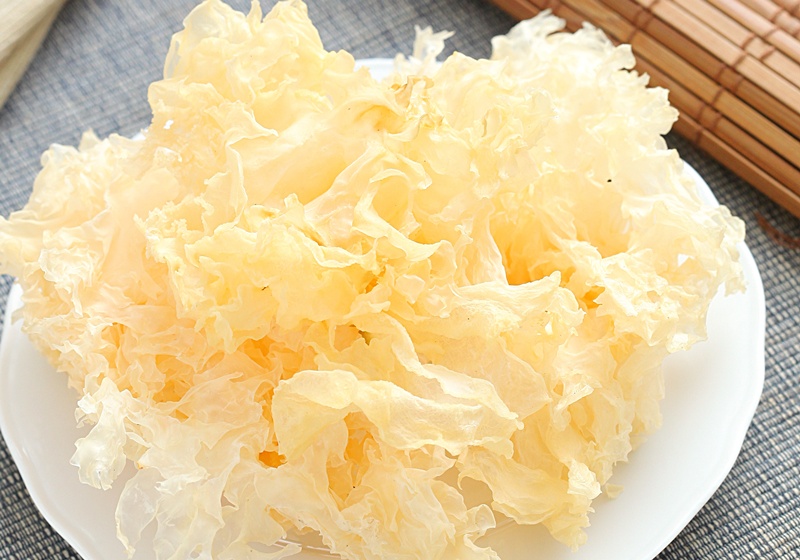
He was the first one in the town to understand that it would be more profitable to sell the mushrooms in another province of Jiangxi, and started shuttle trading, which worked for a while, until he was caught and accused of profiteering, his and his villager’s goods confiscated.
With no money and a lot of debt he was drafted into a “labour army” and sent to the “Provincial project 06”, building a dam on the river to make a reservoir. Initially the work was extremely hard, but very soon their barracks caught fire and got burnt to the ground, which was a disaster for everyone, and he took it as an opportunity to actively participate in the relief measures, and became very friendly with the project leadership team.
Later, when his conscription period ended, he still staid there voluntarily, because he had nothing else to do, and the leadership team appointed him into the canteen, and even made him responsible for procurement, a position on which he became well-respected for being incorruptible and for solving a few conflicts among the people. After all he ended up making a some money on that project, and the leadership team even helped him with finding a proof that the Tremella mushrooms had been “collective property”, which allowed him to release the mushrooms from being impounded, albeit on the state-dictated price (about 1/3 lower than the market price).
After the dam was complete, he was released with a bit of money, but no work. He came home and started working as an employee at a seedling farm, for a small salary. While there, he became acquainted with a different kolkhoz farm head, also growing plant seedlings, and he invited DeWang to work for them as a salesman. (Yes, in the midst of the Cultural Revolution, Chinese kolkhoz farms had salesmen.)
He worked as a salesman for the kolkhoz for 3 years, until the Cultural Revolution was over, earning 20% from each sale. (I am finding this hard to believe.) Eventually he resigned, presumably because he didn’t feel that the farm had growth perspectives after the end of the Cultural Revolution.
2.2. Arduously making business
He initiates a construction of a glass factory for polishing water-meter glasses. Although he finds two seemingly qualified engineers, finds the investor (his local government), and is the running motor of the plan, his official position is only sales and purchases, nothing administrative.
The factory fails to produce passable quality output for a long time, and he is going to Shanghai to find an engineer who can help them debug the issue. He finds one at the Shanghai glass factory, who turns out to be a woman. He is surprised, but she quickly finds an issue with their equipment and earns his great respect.
The Shanghai plant management arranges a flight for them to go to Fujian and back, which is his first flight, and he is amused.
After the plant is set up, he does not have a lot to do, and goes to a Daoist-Buddhist temple on top of a mountain, together with his friend.
Being a “sales and procurement” person on the factory turned out to be a great opportunity to make connections and learn how to do business. In Fuzhou they made business by spending time in a hot spring where all of the city “elite” were gathering.
He also had a many opportunities to go to Shanghai and other cities of China to discover useful people, especially people who participated in the state planning system. The book has an interesting introduction into the Chinese-style planned economy.
In 1980, his former boss at the sapling farm sent him a letter, admitting that he was dying from cancer and asked Cao Dewang to help him, arrange his son’s marriage.
Eventually, the village party committee “subcontracted” factory management to him, whatever that means. (The word is 承包, and I don’t understand what it means in this context.) This has proven to be a success, he made the factory work three shifts a day, hired 60 more people, implemented KPI-based salary system, effectively increased salaries 5 times, and increased factory productivity at least three times.
He also had some “political” experience at the time. He found out that manufacturing glass according to the standard is hard, but also that the standard is excessively fine, so he went to the government bureau and an industrial conference to speak about this problem, and effectively lowered the standard for his factory. (The standard was not changed, but nobody complained any more.)
His “subcontract” has proven to be successful, and he earned a lot of money, about 60% of all of the factory profit, because the investors did not expect him to make so much money.
After the end of the contract (one year), he intended to leave the factory and do something else, but before resigning he went to a temple, drew a fortune-strip, and a monk interpreted it for him in a way which suggested that leaving the factory is not a good idea. Nevertheless, even though he did not leave, all of his team left, no matter how much he convinced them to stay. (This part is kinda implausible.)
While re-equipping the factory with new machines, a taxi driver told him that spare car windshields (and other glass pieces) were very expensive, and Dewang decided to make a new factory, adjacent to the previous one, with the goal of making car glass. His village mayor’s office also agreed to invest into the factory, given that Dewang would invest his own money, so Dewang re-mortgaged his newly-built home for this purpose.
Various events helped him be attentive to people around, no matter how, at the first glance, insignificant.
“Arduously making business” ends with a long story on how his, previously supporting, local government, delcided to attack him, accusing him of corruption and misappropriation of funds. This section is quite long, but the main point is that his main counter-action was, seemingly, asking a city party secretary (one level above village secretariat) to examine his case personally. The first accusation failed, and Dèwáng became friends with the city government head, but the village government did not give up, and continued to escalate the issue up to provincial and Beijing level. All attacks failed, and eventually village government people were transferred to other villages.
(But I am sensing something insincere in this story. Why would local management try to destroy the business in which they were shareholders themselves? Did they want to just expropriate Dèwáng’s shares? Strange.)
2.3. Trust as a Capital
The chapter starts with an anecdote on how Dèwáng “avoided” a kickback.
He convinced his investors to move the factory to a bigger place with better access to electricity. In order to do this, they needed to prepare the ground and construct the building. Initially his investor signed a contract with 0.8 yuan per m^3, which was 3 times lower than the market price. Obviously, the supplier offered a kickback for “exceeding” the work plan.
Dèwáng did not agree, and even threatened to sue the supplier and the investor, who had volunteered to be guarantors. (Huh? How did they do it?) After a lot of argument, the work was actually done, working day and night, and he paid the subcontractor 2.8 yuan per m^3, which made the subcontractor his friend forever.
Can I even believe this story?
Eventually the car glass factory was built, also encountering quite a lot of issues with “petty corruption”, such as investors (municipal authorities) trying to make the company buy their relatives’ services and getting their relatives employed. He even had to have an “exam” in Chinese in order to filter out idiots.
They bought Finnish equipment, and while visiting Finland for the first time, he takes pride in making sure that nobody in his company took their business trip allowance to buy stuff to bring it home. (As story too familiar to former Soviet people.) Eventually they also bought equipment from this factory, which allowed manufacturing car door glass very quickly.
The next story is how, on a dragon boat rowing competition, he threw a memorial cup into a reservoir. His telling of the story is that he was promised to manufacture the winner’s cup, and his company donated money, produced the cup, and was ready to give it to the winner, when suddenly the organiser found a better sponsor, and decided that Dèwáng’s cup goes to the fourth place. On the ceremony, Dèwáng threw the cup into the reservoir.
On the factory, he acts in a paternalistic way. He combats waste in the canteen and provides company hall of ceremonies for weddings.
He also considered becoming a Buddhist monk, but went to the temple he had used to visit, and was dissuaded.
He also tells his side of the story of the epic lawsuit between FuYao and their construction contractor (which failed to do a good job), which took 7 years and 100m yuan.
2.4. Heaven rewards the diligent
One of his investors suggested that FúYào group should go public and sell its shares on the open market. However, at that time (~1990) in China there were no rules and guidelines on how to go public, so FuYao ended up being the first experiment.
Not everything went smooth, and people who were initially very enthusiastic about buying shares, eventually became dissatisfied that stock exchange placement took so long, and wanted Dewang to buy back their shares.
All this turned out to be lossy until the General Manager of Societe Generale helped Dewang buy out all those “rogue” shares.
Eventually, after a lot of struggles, he managed to make the company public and instantly became an extremely rich person. (Yes, there is such a way.) This even required convincing the provincial governor of Fujian to fly to Beijing and negotiate with the central government.
However, not everything was bright. In mid-90s China was in an economic crisis, and FúYào was not making a lot of money and was entangled in various inefficient investment projects: the “industrial town” property development, the polymer factory, a lot of repair shops all over the country.
His Hongkong friend suggested restructuring, and then commended a book called “Focus” (Focus: The Future of Your Company Depends on It: Ries, Al). Somewhere about that time he, seemingly, also got a Hongkong passport.
The he went to the USA for the first time, wanting to find out about expanding the market, with no success. During the trip he visited the Ford museum in Detroit, liked it a lot, and even flew to the USA the second time specifically to visit the museum to draw some inspiration. He said that “China now is like the USA 100 years ago”.
Eventually he came up with a plant to reorganise FúYào. He sold the “worker’s village”, closed unprofitable assets, and sold their network of distributors to current managers.
Later they received investment from https://en.wikipedia.org/wiki/Saint-Gobain , and they appointed one director onto the board.
They tried selling glass to the USA via a proxy storage company called GGI, but the business did not turn out profitable, and he wanted to close it, but Saint-Gobain objected. At the end of the day, “cooperation” with Saint-Gobain was a failure and eventually DéWàng convinced them to withdraw the investment.
From 1998 he also remembers the Indonesian branch of ASAHI glass coming for help with supplies, which was a thing during the Asian financial crisis. About the same time he learnt golf and started playing it in the morning.
2.5. Morals and righteousness lay on iron shoulders
There is a story about his employee getting cancer and him spending a lot of money to try and treat him, but in vain.
There are two business development stories in this chapter.
One is about building a factory in Chongqing, which required a lot of “cooperation” with the government officials, and even involvement of his relative in order to build connection and get allocated a good piece of land. The other one is about being almost forced to buy an old (1948) factory in Manchuria, which local government wanted to sell due to it being lossy. The problem was that this factory was a kolkhoz, and all 2000 employees were shareholders. Anyway, he convinced local leadership to bankrupt this factory and took over for a minimal price.
Interestingly, this factory was making “float glass”, not car glass, so it was only fit for buildings. And the issue was that construction work was not at the time performed in winter due to soil being frozen. Also, Manchuria had several factories making glass and the industry was suffering from over-production forcing very low prices. Since he fired 1800 workers out of 2000, he could make the price much lower, but fierce competition still made sure that he could only sell in summer, when there was some demand. His clever trick was stockpiling glass for future sales during summer, and not selling below the profitable price in winter.
When he bought, bankrupted, and re-structured that factory, another city mayor offered him another factory, which was also state-run, and almost bankrupt. He claims to have hesitated at first, but later conceded, bought, bankrupted and restructured the second factory too.
The interesting thing about all this story is that at the time all factories in Manchuria were operating at a loss, and selling glass way below the market price. How so? Well, because of mismanagement and because of a cartel pact of the distributors. They were all in debt, but it is not feasible to stop a glass furnace just as it is not feasible to stop a steel melting blast furnace. So factories continued to manufacture and sell glass during the winter, when the demand is low, at low prices just to keep the furnaces working. As a result, they were all in debt.
Cao DeWang implemented stockpiling on those factories, and stopped selling all glass during winter time. This was his know-how, other factories did not know how to stockpile glass and not let it become mouldy. So, in spring he started selling glass at market price, and distributors were forced to buy from him, because other factories were out of stock, having sold everything at low price during winter.
He also tells the story that shows him as a supporter of good natural environment. He ad built a sand-processing factory for his Manchuria factories, which used fluoride acid to clean the sand from contamination, but eventually found that it is not possible to fully process residual solution from fluoride, which made it toxic. So in 2006 he closed that plant and started to purchase sand from another province.
Another story is a story about toll stations. At some point Fúqīng city government wanted to get a loan from him, because they needed to repay a loan and didn’t have cash. (You’re asking me how this can happen? I don’t know.) He made them give min four high-speed toll stations into management as a collateral. He re-organised the management at those stations, forbade “important people” and locals from ignoring the fee, and raised the revenue by 30%. All his legal profits he donated to the city department of transportation to build new and repair old roads, and after 3 years convinced the city government to completely decommission those toll stations. Seems like a noble affair, at least makes him look noble. Funny thing, the government also made him pay the income tax on the donated profits.
They also built a car “float glass” factory in Fúqīng. During the buildup there was a scary event when wind blew down their sand storage, a whole building.
He spends a whole section describing the 2008 World Financial Crisis. He praises himself for predicting it early and closing several non-profitable production lines, implementing rigorous management policies at the remaining factories, and negotiating with the city government in Manchuria a possible subsidy (which he later refunded to them back). He says that this is one of the few known cases when a company refunds government’s support money. He invited Korean management consultants for conducting training on his factory. He also discusses how US government mismanagement caused the mortgage crisis and how the “three big car manufacturers” in the USA probably will not be bankrupted.
In 2009 he won the “Ernst&Young” Global Entrepreneurship Award. He is telling this as a funny anecdote in which he did not even have a large part to play. He was dragged into the competition by his acquaintance who worked for Ernst&Young China and really wanted a Chinese company to win the prize. After winning the China stage, mostly by protection from that guy, they flew to Monte-Carlo together, and Cáo DéWàng played the usual “villager in a city” trick by not having leather shoes and a tie, and not even having prepared his application speech. Being urged to refine himself, he still managed to buy a tie, a pair of shoes, and prepare his 5 minute speech in one afternoon. Of course he won the prize, effectively by telling to the jury that “Big Three American car manufacturers will not get bankrupt”. Of course they did not.
2.6. Going international
2.6.1. Going to Russia
In 1996 he went to Russia, as a part of the FúJiàn government delegation. They went to Saint-Petersburgh, Sochi, and Moscow. SPb impressed him by its grand and ceremonious architecture, but he does not tell any stories about what happened there, except that they were greeted by a Duma official.
In Sochi they studied a kolkhoz, apparently, not privatised, and he tells a few anecdotes.
- They caught a few sea turtles for lunch, and locals were baffled by that.
- The kolkhoz secretary invited them to build a mill near the kolkhoz, and when they asked for a “feasibility study” and a business plan, the secretary was baffled, he had never heard about anything like that.
- The kolkhoz secretary told them the story about how Russian economy works: “There is a big gas pipe from Russia to Europe, the government sells gas and buys cheap Chinese goods. In fact, gas fees lets the government pay salaries to half of the country.”
(Souns fresh.)
In Moscow they also mostly did sight-seeing, and he was very disappointed by the quality of the hotel, which did not even allow their hosts to join the meal, because “it is not in the plan”. They met with the local Chinese trade representatives, who told them that the “protection fees” in Moscow are very high, a single ice-cream stand mush pay 5000 USD each month.
In general, however, he expressed positive thoughts about Russian future, saying that if the reform succeeds, a bright future is awaiting Russia due to a highly developed heavy industry and a lot of resources.
2.6.2. Facing the anti-dumping lawsuit
In 2001, FúYào and other Chinese car glass manufacturers were sued for selling their products “below the market price” and thus damaging the US economy.
This lead to a court case, which lasted years, in which FúYào tried to defend its position. Cáo DéWàng claims that they had prepared more than a ton of documents to substantiate their position.
In 2002 they were also sued in Canada, by a glass manufacturer PPG, also for dumping, but this case proved easy to win, just by proving that PPG as a US company, not a Canadian company.
They finally won the US lawsuit in 2004, and even had their pre-paid “anti-dumping tariffs” refunded.
This story impressed Cáo DéWàng so much that he even organised a research department, associated with a law school, which would be collecting data on anti-dumping cases all over the world, and funding anti-anti-dumping lawyers and researchers.
2.6.3. Finding an agreement with the Kremlin
In 2010 he visited Kaluga, on an invitation from the governor, suggesting that he build a glass factory there, because Kaluga was trying to become a “Russian Detroit”, and had already domesticated Ford, Renault, and Honda.
He is saying that in 2010 Kaluga only had a single “pocket” hotel, built and run by the Germans for their own factory.
He tells a wonderful story on how expensive is building a factory in Kaluga.
- Land: 5$
- Design: 30$
- Construction works: 200$
- Concrete: 300$ per tonne.
He was surprised that regulations do not allow importing neither a design plan nor a construction team from China. He talked to the governor and said that under such conditions he would withdraw from the project, and they agreed that a Chinese design can be “converted”, and a construction team can be invited from China, as long as they register a company in Russia to organise the works.
In 2011 the project was underway, but the Russian part required that the agreement be signed in the presence of Hú JǐnTāo, in the Kremlin. It took them 2 months to make an agreement on when the signing ceremony can be organised. The Russian made the Ministry of Foreign Affairs send invitations three times (!), the first two being rejected.
Cáo DéWàng is saying that this was one of the most nervous times in his life. After all, his company is not that large, and not state-run. But after all, the Russian MFA succeeded, and found time when the Chinese leader was visiting Moscow.
2.6.4. A VIP on a party.
After his factory in Kaluga had been completed, they organised a reception ribbon-cutting event, which, since the contract was witnessed by the top leaders, received an all-Russian attention.
Cáo DéWàng prepared a speech for this event, in which he was promising Russia a bright future, was describing several Russian problems and ways to solve them and hence make some money.
This speech is so interesting that I will eventually translate it into Russian, I suspect, but I will not copy it here.
After the reception he met with two representatives of the states of Michigan and Ohio, who were invited to the event as a part of the international community, and they invited him to invest in the USA.
2.6.5. How a smart Jewish guy taught him to make business.
In 2013 they purchased a factory in Ohio, which had used to belong to General Motors, and was later purchased and refurbished by a Jewish guy.
FúYào bought a half of this factory from him, and he also told them a story on how Rockefeller sold his skyscraper to the United Nations for a single dollar.
Of course, the building had cost much more than one dollar, but Rockefeller also owned most of the buildings nearby, and giving one for free to the United Nations make all of those properties rise in price and make him much more money than the price of a single building.
2.6.6. America is also in search for an economic transformation.
It was 2014, and, since he was planning to invest in the USA, he was considering pros and cons.
This chapter is quite long and full of insights, so I will not re-tell it here, but generally he describes the following pluses and minuses of the US position.
Pluses:
- A good Constitution and a legal system which enforces property rights
- American Dollar is the world’s reserve currency
- A united political culture, which gets to every citizen
- Outposts all over the world, including Hawaii
- Quick access to international politics through United Nations headquarters
- Simple lifestyle of its citizens, signified by Coca-Cola
- Incessant strive for progress, signified by Apple
- Sports culture, which is as important for Americans as food culture is for Chinese
- Wall Street and the concentration of the world capital
Minuses:
- Too much influence of the Wall Street, whose interests are wildly different from ordinary Americans
- Decaying manufacturing, caused by the over-reliance of the economy on “services”
- Weird political system which is not bringing in the people who can address issues, in particular, neither party represents the society as a whole and sees the full picture
- The exceptionalist attitude of most Americans, who believe that their achievements are mostly due to their own industriousness and skill, whereas in fact it is due to the fact that they won the WW2 without taking much part in it.
This is 2014, and he is still quite positive about investing in the US manufacturing, but is still saying that the US economy has not fully recovered.
2.6.7. Investing in the USA
This chapter is actually not that much about his own investments in the USA, but rather about finding a correct stance to the USA in general.
The story he is telling there is about helping the University of Dayton buy a building in China, where they had a branch, but could not buy a building due to legal difficulties. At the end of the day, he donated the price of the building to the university, or rather made his company donate those money, and thus established “good friendship” in the USA, and the university thereupon helped him a lot to “merge” into the American society.
His point is “when making a business in China, I tried to work for the Chinese nation, when investing in the USA, I need to learn how to work for the American nation”. Not sure how truthful he is, but nevertheless.
2.7. Afterword
While reading the book, I had a feeling, several times, that the book is not written by him, but rather by some hired authors. But in the afterword he is claiming that this is not the case, that he wrote the book all by himself, even though there had been previous unsuccessful attempt to hire paid biographers.
He is also claiming that the book is written by him on a suggestion by his fellow philanthropists, given to him at the 2015 Hawaii philanthropy summit.
He also points out that China, even though it has become the second world economy during the past 30 years, still has many problems, including a great divide between the poor and the rich, and that he deeply praises the USA for their social system, which provides reconciliation between social classes.
3. Blurb
- Mail (best way to reach me) :: lockywolf at lockywolf.net
- Telegram :: https://t.me/unobvious
- Zhihu (cn) :: https://www.zhihu.com/people/lockywolf
- LiveJournal (ru) :: https://dead-doomer.livejournal.com
- Wordpress (en) :: https://lockywolf.wordpress.com
- Permalink :: https://lockywolf.net/2025-12-24_Heart-of-Bodhi-by-Cao-Dewang.org.d/index.html